
E-commerce development
Softeta builds, modernizes, and integrates e-commerce systems for companies that have outgrown off-the-shelf platforms. We create bespoke commerce software, websites, and content management that adapt to your business goals.
From custom development to advanced integrations, we help you scale your online presence while keeping full control of your data and roadmap.


When your platform stops fitting the business
Tell us where it hurts – we’ll tell you what we’d build.
The Problem
Off-the-shelf wasn't built for what you do now
You picked Shopify Plus, Magento, or BigCommerce when the goal was to ship fast. It worked. The business grew – into B2B contracts, into multiple countries, into custom pricing rules, into integrations with your ERP, your warehouse, your fleet, your payment providers, and three different marketing tools.
Now the platform pushes back. Custom logic lives in five places. Every plugin update breaks something. Your B2B and B2C catalogs are running on top of each other and neither one is happy. Your team spends more time around the platform than on it.
The temptation is to migrate to another platform. Then in three years, you’re here again. There’s a better move.
The Approach
We build the parts that should be yours and then we integrate the rest
The strongest e-commerce systems we’ve built aren’t monoliths. They’re composable: a focused commerce backbone, business logic in clean modules, and integrations that respect what each system is good at.
Most “one new ERP for everything” projects fail because they try to absorb every business process into a single vendor. We do the opposite. We treat your real workflows as the source of truth and build software that fits them.
That means:
- A commerce engine that handles the e-commerce parts well – and stops there.
- Business modules (pricing, orders, inventory, customer, vehicle/asset) that map to how your team actually works.
- Integrations to the systems you already trust (accounting, ERP, POS, warehouse, marketing automation) instead of replacements.
- Clean APIs between the layers, so any one piece can be replaced without rebuilding the rest.
You keep the data. You keep the architecture. You keep the option to change vendors when you need to.
Composable doesn’t mean complicated. It means the next change won’t cost you a year
What we do
From technology foundations to accelerated growth
Architecture and consulting
We start where most platform projects should with a hard look at what you actually need, what you already have, and where the seams should run. Two to four weeks, fixed scope, real recommendations.
Modernization without overkill
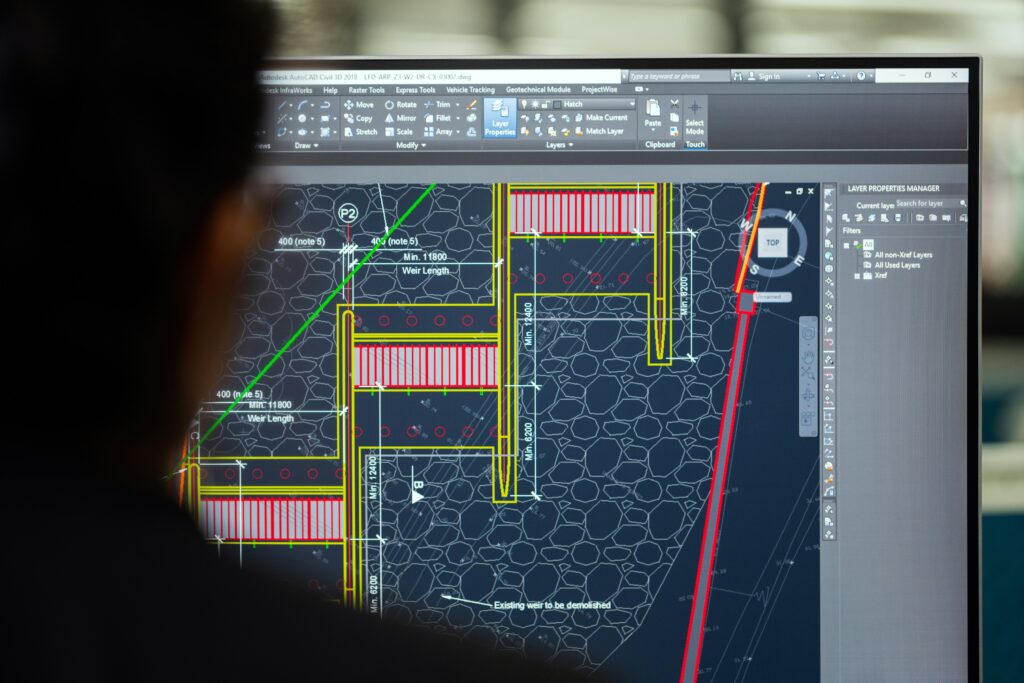
Most replatform projects are really modernization projects in disguise. We migrate what’s worth migrating, rebuild what’s blocking growth, and keep the lights on while we do it. No unnecessary tasks.

Custom commerce systems
When the business model needs something off-the-shelf can’t bend to: a B2B PRO portals, fleet self-service, multi-channel order management, custom pricing engines – we build it.

Integration and AI/automation
Catalogs, payments, warehouses, suppliers, marketing tools, AI-driven pricing, recommendation engines, ops automation. The work that turns a stack into a system. And no zero-value AI integrations.
Senior level team that ships
ISO 9001:2015-certified processes and a team assembled for your project, not borrowed between five clients. They’ve shipped e-commerce systems for Pigu, Apranga, Kakava, and Melga, and they know what breaks at scale.

You stay in control
Your data, your architecture decisions, your roadmap. Composable systems mean you can swap modules, change vendors, or take the work in-house – without burning the foundation. We lead with the business question and serve as partners, not lock-in.

How a typical engagement runs
A transparent, flexible approach designed around your goals.
Discovery phase (1–2 weeks)
A working session with your team. We map the current stack, name the real bottlenecks, and define what “done” looks like. You get an architecture recommendation.
Architecture and scoping (2–4 weeks)
Composable design, module breakdown, integration plan, milestones. We agree on what’s in and what’s out before a line of production code is written.
Build (typically 3–9 months to go live)
A dedicated team: tech lead, architect, engineers, QA, BA – works in your sprints, on your tooling, with your stakeholders. Weekly demos. No black boxes.
What we're working on
Here’s few of our e-commerce development works:

A composable rebuild for an auto parts retailer
Challenge
A regional leader in tire retail and service was running B2C, B2B, fleet, service booking, and tire storage on one aging, breaking e-commerce platform.
Approach
Composable architecture with separate business modules for orders, customer/vehicle data, pricing, warehouse, mobile workstations and POS.
Result
B2C platform in production, B2B PRO and self-service rolling out next, no vendor lock-in, and a team of 7 senior engineers averaging 8 years of experience on it.

Order management for a multi-channel distributor
Challenge
Manual quoting, fragmented channel pricing, no single view of inventory across warehouses. Sales team spent half their time on administrative tasks, order management and billing.
Approach
Centralized order management system, AI-assisted quoting, real-time inventory sync, integrations with the existing CRM and accounting. All optimized for marketing as well.
Result
Quotes turned around in minutes, sales team back to selling, inventory accuracy across channels. The new system double-speed sales operations and the order management processes.

A B2B portal for a global SaaS partner network
Challenge
Dozens of partners managing their accounts through email and spreadsheets. Onboarding took weeks instead of hours. No self-service existed.
Approach
Custom B2B portal built on a composable stack, partner self-service for orders, billing, support, and reporting, SSO and audit logs from day one.
Result
Partner onboarding time was cut from weeks to hours, support tickets dropped in volume and the sales team was finally enabled to focus on managing revenue streams and building new client pipelines.
What we’ve shipped for teams like yours and the results they achieved
View case studies
Softeta has been a reliable software engineering partner for over four years, during which we have come to see them as an integral part of our own company. Their team combines strong technical expertise with excellent communication and a proactive approach to problem‑solving. Over the years, they have consistently delivered high‑quality solutions, worked closely with our internal teams, and proven themselves to be a trusted and highly valued partner. We highly recommend Softeta to any company looking for a solid and dependable technology partner.
Linas Klevinskas
Head of System Development at Kakava.lt
Ways we collaborate with you
A transparent, flexible approach designed around your goals.
On-demand engineering talent
Extra talent that boosts your projects. Our experienced engineers integrate directly with your in-house team, bringing flexibility, technical depth, and fast scaling capacity. All without the overhead of hiring.
Building a dedicated team
A fully autonomous team focused on delivery from day one. We assemble a cross-functional group of experts to match your project goals, work within your roadmap, and take full responsibility for execution and outcomes.
Developing entire project
We take full responsibility for delivering a clearly scoped system, module, or feature – from architecture to deployment. We handle design, development, testing, and ensure long-term maintainability.
Frequently asked questions
Questions we hear at the first call
How long until we see something working?
First architecture recommendation: 2 weeks. First working slice in production: usually 8-12 weeks for a focused engagement. Full replatform projects run 6-12 months depending on scope. We commit to the timeline before we start, not after.
Won't custom software become legacy in 3 years?
That’s exactly what composable architecture is designed to prevent. Each module can be replaced without rewriting the others. The whole point is that you’re never trapped — including by us. We’ve moved clients off systems we built, and we’re fine with it.
What if our team already started building something internally?
Most teams we work with had an internal tool first. The switch usually makes sense when maintenance starts competing with roadmap time – typically around the second on-call rotation where someone fixes the integration pipeline at 3am. We help you migrate, keep your custom integrations, and document the result.
Looking for a tech partner?
Select your project type and submit the form, or contact us for details.